
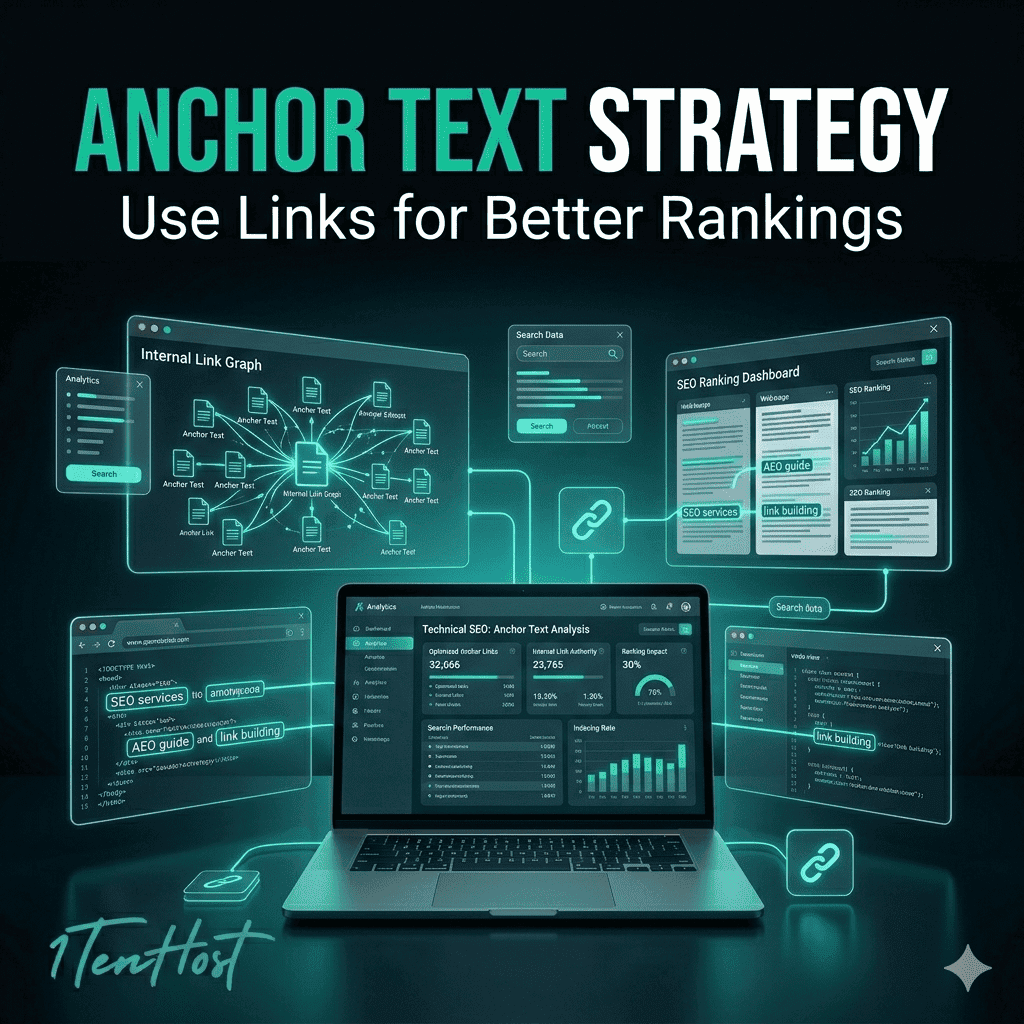
Learn how anchor text SEO works in 2026, including anchor text types, internal linking strategies, backlink optimisation, and common mistakes to avoid.
Introduction
Links are one of the foundations of SEO, but the clickable words inside those links matter more than many people realise. Those clickable words are called anchor text, and they help search engines understand what linked pages are about.
Used correctly, anchor text can improve rankings, strengthen internal linking, and help search engines understand website structure. Used poorly, it can look manipulative and even trigger ranking problems.
That’s why anchor text SEO remains an important part of modern optimisation strategies in 2026.
Whether you run a business website in Karachi, manage an agency in London, or operate a global eCommerce brand, understanding anchor text strategy helps improve both user experience and search visibility.
Good anchor text helps:
- Improve topical relevance
- Support internal linking
- Pass contextual SEO signals
- Strengthen content structure
- Improve navigation
In this guide, we’ll explain what anchor text is, the different types of anchors, best practices for optimisation, mistakes to avoid, useful SEO tools, and how businesses can build smarter linking strategies in 2026.
What Is Anchor Text
Anchor text is the clickable text inside a hyperlink.
For example:
“Learn more about local SEO services”
In that sentence, “local SEO services” could be the anchor text linking to another page.
Why Anchor Text Matters
Search engines use anchor text to understand:
- The topic of the linked page
- Contextual relationships
- Website structure
- Relevance signals
Anchor text also helps users know what to expect before clicking a link.
Anchor Text in SEO
Anchor text plays a role in both:
- Internal linking
- Backlinks
Internal anchor text helps search engines navigate your own website.
Backlink anchor text helps external websites pass relevance signals.
User Experience Matters Too
Anchor text should always feel natural for readers.
Good anchors improve navigation and help users discover related information more easily.
Poor anchor text often creates confusion or feels spammy.
Types
There are several types of anchor text used in SEO.
Understanding each type helps create more balanced optimisation strategies.
Exact vs Partial Match
Exact match anchor text contains the exact target keyword.
Example:
anchor text SEO
Partial match anchor text includes keyword variations naturally.
Example:
guide to improving anchor text strategy
Partial matches usually feel more natural and safer long term.
Branded Anchor Text
Branded anchors use a company or brand name.
Examples:
Branded anchors often appear natural in backlink profiles.
Generic Anchor Text
Generic anchors include phrases like:
- Click here
- Learn more
- Read this article
These are common but provide little SEO context.
Overusing generic anchors weakens topical signals.
Naked URL Anchors
These use raw URLs as anchor text.
Example:
They are common but not ideal for SEO optimisation.
Image Anchors
When images are linked, the image alt text often acts similarly to anchor text.
That’s why descriptive alt text matters for SEO.
Best Practices
Strong anchor text strategies balance SEO value with natural readability.
Keep Anchor Text Relevant
Anchor text should match the topic of the linked page.
For example:
A link pointing to an SEO audit page should use related wording like:
- SEO audit guide
- technical SEO audit
- website SEO analysis
Relevance improves contextual understanding.
Use Natural Language
Anchor text should fit naturally within sentences.
Avoid awkward keyword stuffing.
Good example:
“Businesses in Clifton, DHA Karachi, Soho, and Shoreditch increasingly invest in technical SEO strategies.”
Natural writing improves readability and trust.
Diversify Anchor Types
A healthy anchor profile uses a mix of:
- Exact match anchors
- Partial match anchors
- Branded anchors
- Generic anchors
Too much repetition can look manipulative.
Optimise Internal Anchor Text
Internal links help distribute authority across websites.
Strong internal linking improves:
- Crawlability
- User navigation
- Topic relationships
- Indexation
Important pages should receive relevant internal links regularly.
Focus on Context
Search engines evaluate surrounding text alongside anchor text itself.
Contextual relevance matters more than isolated keywords alone.
Mistakes
Many websites unintentionally weaken SEO through poor anchor text practices.
Overusing Exact Match Keywords
One of the biggest mistakes is excessive exact match anchor text.
Bad example:
Using “best SEO agency Karachi” repeatedly across dozens of backlinks.
This may look unnatural to search engines.
Balanced variation is safer.
Keyword Stuffing
Stuffing multiple keywords into one anchor often hurts readability.
Bad example:
“cheap best affordable SEO company London services”
This looks spammy and creates poor user experience.
Generic Anchors Everywhere
Too many “click here” or “read more” anchors reduce contextual clarity.
Search engines prefer descriptive linking language.
Linking Irrelevant Pages
Anchor text should match the destination topic.
Linking unrelated pages creates weak topical relationships.
Ignoring Internal Linking
Some websites focus only on backlinks while neglecting internal anchors.
Strong internal linking remains essential for SEO structure.
Tools
Several SEO tools help analyse anchor text profiles and internal linking.
Backlink Analysis Tools
Popular SEO tools include:
These platforms help analyse:
- Backlink anchors
- Exact match ratios
- Referring domains
- Link quality
Internal Linking Tools
Website crawlers can identify internal linking opportunities.
Useful tools include:
These help identify:
- Orphan pages
- Weak internal linking
- Broken links
- Crawl depth problems
Google Search Console
Google Search Console also provides useful insights into internal and external links.
It helps monitor:
- Top linked pages
- Internal linking patterns
- Indexed URLs
AI & Content Optimisation Tools
Modern AI SEO platforms increasingly assist with:
- Link recommendations
- Semantic optimisation
- Topic clustering
- Content relationships
These tools support smarter internal linking strategies.
Strategy
Effective anchor text SEO requires long term planning rather than random linking.
Build Topic Clusters
Modern SEO increasingly relies on topical authority.
Topic clusters connect related articles using strategic internal anchors.
Example:
A technical SEO guide may internally link to:
- Core Web Vitals
- URL structure
- Schema markup
- Internal linking
This strengthens semantic relationships.
Prioritise User Journey
Internal linking should guide users naturally through websites.
Good strategies help users discover:
- Related services
- Helpful guides
- Relevant products
- Supporting resources
Better navigation often improves engagement metrics.
Balance SEO & Natural Writing
The best anchor text feels invisible to readers because it fits naturally into content.
SEO optimisation should never damage readability.
Audit Anchor Profiles Regularly
Businesses should periodically review:
- Exact match usage
- Broken links
- Over-optimisation risks
- Internal linking gaps
SEO strategies evolve over time, and anchor text should evolve too.
Frequently Asked Questions
What is anchor text in SEO?
Anchor text is the clickable text inside a hyperlink that helps users and search engines understand linked content.
Does anchor text affect rankings?
Yes. Anchor text provides contextual relevance signals that can influence SEO performance.
What is exact match anchor text?
Exact match anchor text contains the precise target keyword of the linked page.
Is too much exact match anchor text bad?
Yes. Excessive exact match anchors can appear manipulative and may create SEO risks.
Why is internal anchor text important?
Internal anchor text helps search engines understand website structure and relationships between pages.
Conclusion
Anchor text SEO remains an important part of modern search optimisation in 2026.
Well-optimised anchor text helps search engines understand content relationships while also improving navigation and user experience. From internal linking and backlink anchors to topical relevance and semantic structure, strong anchor strategies support better website organisation and stronger SEO performance.
The key is balance.
Good anchor text should feel natural, descriptive, relevant, and helpful rather than overly optimised or spammy. Businesses that build thoughtful linking structures are far more likely to strengthen topical authority and long term rankings.
Contact Information
Need help with technical SEO, internal linking strategy, or backlink optimisation?
Website: 1TenHost
Email: info@1tenhost.com
WhatsApp: WhatsApp Support

1TenHost.com





Leave a Reply