
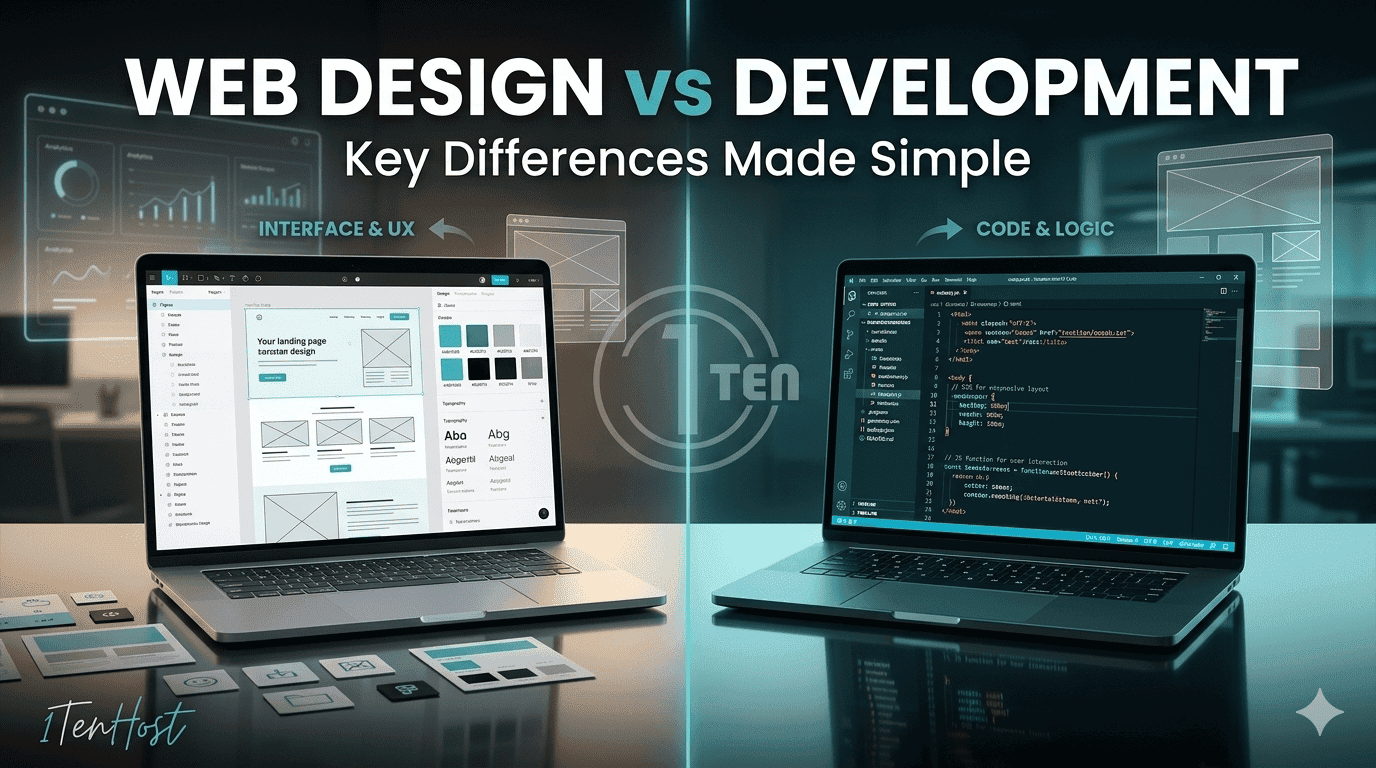
Confused about web design vs web development? Learn the key differences, roles, and which one your business needs in this simple 2026 guide.
Introduction
If you’re planning a website, one question comes up almost immediately. Web design vs web development, what’s the difference?
It sounds simple, but many business owners mix the two up.
Here’s why it matters. If you hire the wrong service, you might end up with a site that looks great but doesn’t work properly, or one that works but looks outdated and confusing.
Whether you’re running a business in Karachi or targeting customers in London or New York, understanding this difference helps you make better decisions, save money, and get real results.
Let’s break it down in a way that actually makes sense.
Defining Web Design
Web design is all about how a website looks and feels.
It focuses on the visual side and user experience. A web designer creates the layout, chooses colours, selects fonts, and plans how users will interact with the site.
Key responsibilities of a web designer:
- Creating page layouts and structure
- Designing user interfaces (UI)
- Improving user experience (UX)
- Choosing colour schemes and typography
- Designing responsive layouts
In simple terms, web design is the appearance and experience of a website.
A good design makes your site easy to use, visually appealing, and aligned with your brand.
Defining Web Development
Web development is about building the website so it actually works.
Developers take the design and turn it into a functional system using code.
Their job includes:
- Writing code using HTML, CSS, and JavaScript
- Building features like forms, logins, and dashboards
- Connecting databases
- Ensuring performance and speed
- Fixing bugs and technical issues
In short, web development is the engine behind the website.
Without it, your design is just a static concept.
Front-End vs Back-End
Web development itself has two main sides. Front end and back end.
HTML, CSS, JavaScript
Front-end development is what users see and interact with.
It uses core technologies like:
- HTML for structure
- CSS for styling
- JavaScript for interactivity
This is where design meets development. Front-end developers bring the designer’s vision to life in the browser.
Frameworks and Libraries
Modern websites often use tools to speed up development.
Common examples include:
- React
- Angular
- Vue.js
These frameworks help create faster, more interactive websites.
Back-end development, on the other hand, works behind the scenes.
It handles:
- Servers
- Databases
- Application logic
Languages often used include:
- Node.js
- PHP
- Python
Users don’t see this part, but it’s critical for functionality.
Full-Stack Development
A full-stack developer works on both front end and back end.
They can:
- Build user interfaces
- Develop server-side logic
- Manage databases
- Handle complete web applications
Full-Stack Skills
To be effective, a full-stack developer needs:
- Knowledge of front-end technologies
- Experience with back-end programming
- Understanding of databases
- Familiarity with deployment and hosting
For many businesses, especially startups, hiring a full-stack developer can be a practical choice.
Which Service Do You Need?
This depends on your goals.
Business Decision Guide
You may need a web designer if:
- You want a modern, attractive website
- Your current design feels outdated
- You want better user experience
You may need a web developer if:
- You need custom features or functionality
- Your website has technical issues
- You’re building a complex system
In most cases, you need both.
For example:
- An ecommerce store needs design for user experience
- It also needs development for payments, carts, and backend systems
Businesses in competitive markets like Karachi, London, and New York usually benefit from a combined approach.
Working with Both
The best websites are built when designers and developers work together.
Design-Dev Handoff Process
Here’s how a typical workflow looks:
- The designer creates layouts using tools like Figma
- The client reviews and approves the design
- The developer converts the design into code
- Testing ensures everything works smoothly
- The website is launched
Clear communication during this process is key.
If the handoff isn’t smooth, you may face issues like:
- Design mismatches
- Broken layouts
- Poor user experience
A good team avoids these problems by collaborating from the start.
FAQ Section
What is the main difference between web design and web development?
Web design focuses on how a website looks and feels, while web development focuses on how it works.
Can a web designer also be a developer?
Some professionals have both skills, especially full-stack developers, but many specialise in one area.
Do I need both web design and development?
Yes, in most cases. Design attracts users, while development ensures the site functions properly.
Which is more important, design or development?
Both are equally important. A successful website needs strong design and reliable development.
Is front-end development part of web design?
Front-end development sits between design and development. It brings the design to life using code.
Conclusion
So, web design vs web development, what’s the real takeaway?
Web design is about experience.
Web development is about functionality.
You can’t rely on one without the other.
A visually stunning website that doesn’t work is useless. A fully functional website that looks outdated won’t convert visitors.
If you want real results, you need both working together.
Whether you’re targeting local customers in Karachi or expanding into global markets like London and New York, investing in the right mix of design and development is key to long-term growth.
Need expert help with your website?
🌐 1tenhost.com
📧 info@1tenhost.com
📱 https://wa.me/923451151625
Let’s build something that actually performs.

1TenHost.com





Leave a Reply