
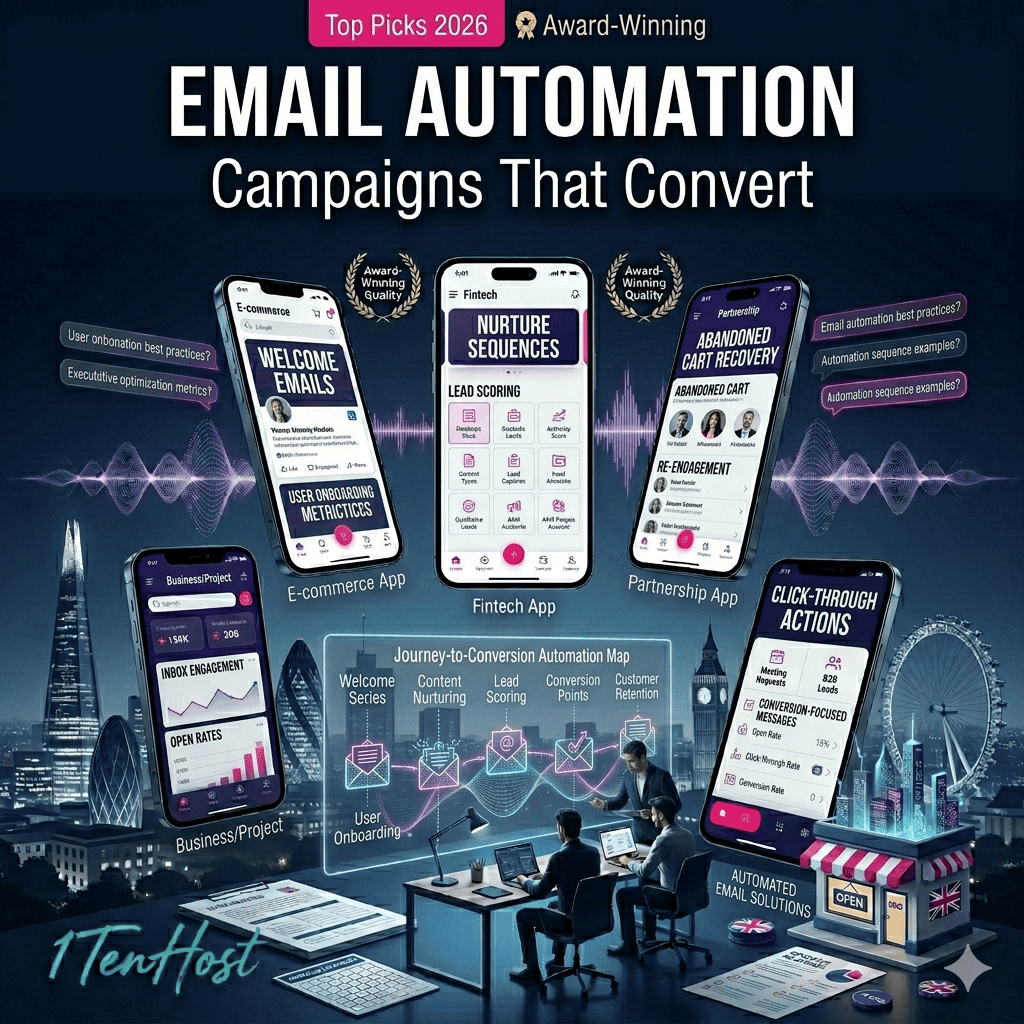
Learn how to build high-converting email marketing automation campaigns in 2026. Discover segmentation, drip sequences, A/B testing, email tools, and ROI strategies.
Introduction
Despite the rise of social media, AI search, and new marketing channels, email remains one of the highest-performing digital marketing tools available.
Why? Because unlike social platforms where algorithms control visibility, email gives businesses direct access to their audience. When combined with automation, it becomes even more powerful. Instead of manually sending messages, businesses can create intelligent workflows that nurture leads, recover abandoned carts, onboard customers, and generate sales automatically.
The difference between average and exceptional email marketing often comes down to automation. A well-designed automated sequence can guide a prospect from initial awareness to purchase without requiring constant manual effort.
Whether you’re running an ecommerce store, SaaS company, agency, or local business, implementing email marketing automation campaigns can dramatically improve engagement, conversion rates, and customer retention.
This guide explores the most effective automation strategies, platform options, segmentation methods, testing frameworks, and key performance metrics that businesses should focus on in 2026.
What Is Email Automation?
Email automation is the process of sending emails automatically based on predefined triggers, actions, or customer behaviours.
Instead of manually sending individual emails, businesses create workflows that deliver relevant messages at the right time.
How Email Automation Works
Automation triggers may include:
- New subscriber sign-ups
- Product purchases
- Cart abandonment
- Website activity
- Lead magnet downloads
- Customer inactivity
Once triggered, automated sequences begin delivering scheduled emails.
Benefits of Email Marketing Automation
Key advantages include:
- Increased efficiency
- Higher conversion rates
- Better customer experiences
- Consistent communication
- Improved lead nurturing
Automation allows businesses to scale communication without increasing workload.
Common Types of Automated Campaigns
Popular automation workflows include:
- Welcome sequences
- Lead nurturing campaigns
- Cart recovery emails
- Customer onboarding
- Re-engagement campaigns
- Product recommendation emails
Each serves a different purpose within the customer journey.
Platform Comparison
Choosing the right email marketing platform is crucial for long-term success.
Mailchimp vs Klaviyo
Two of the most popular platforms are Mailchimp and Klaviyo.
Mailchimp
Mailchimp is known for:
- Beginner-friendly setup
- Easy-to-use templates
- Basic automation features
- Affordable entry plans
It works well for small businesses and startups.
Klaviyo
Klaviyo focuses heavily on ecommerce automation.
Strengths include:
- Advanced segmentation
- Deep ecommerce integrations
- Revenue attribution tracking
- Personalised automation workflows
It’s particularly popular among Shopify and WooCommerce stores.
Which Platform Is Better?
Choose Mailchimp if you need:
- Simplicity
- Basic automation
- Lower initial costs
Choose Klaviyo if you need:
- Advanced ecommerce automation
- Behaviour-based targeting
- Detailed customer insights
ActiveCampaign Review
ActiveCampaign remains one of the most powerful automation platforms available.
Its strengths include:
- Advanced automation builder
- CRM integration
- Lead scoring
- Dynamic content personalisation
Businesses with more complex sales funnels often prefer ActiveCampaign.
Other Popular Email Marketing Tools
Additional options include:
- HubSpot
- Brevo
- ConvertKit
- GetResponse
- Omnisend
The best choice depends on business goals and budget.
Setting Up Sequences
Automated sequences are the foundation of successful email marketing.
Welcome Sequence
A welcome sequence introduces new subscribers to your brand.
Typical structure:
Email 1: Welcome
Send immediately after signup.
Include:
- Introduction
- Brand story
- Expectations
Email 2: Value Delivery
Share:
- Helpful resources
- Guides
- Educational content
Email 3: Trust Building
Highlight:
- Testimonials
- Case studies
- Customer success stories
Email 4: Conversion Offer
Present:
- Consultation offer
- Product recommendation
- Limited-time incentive
A structured welcome sequence often generates some of the highest engagement rates.
Nurture Sequence
Lead nurturing campaigns help prospects move towards a purchase decision.
Content may include:
- Industry insights
- Educational articles
- Product demonstrations
- FAQs
- Success stories
The goal is to build trust gradually.
Cart Recovery Sequence
For ecommerce businesses, abandoned cart campaigns can recover lost revenue.
A common structure includes:
- Reminder email
- Benefit-focused follow-up
- Incentive offer
Many purchases occur after recovery emails.
Re-Engagement Campaigns
When subscribers become inactive, automated re-engagement sequences can help reconnect them with your brand.
Segmentation Strategy
One-size-fits-all email marketing rarely performs well.
Segmentation improves relevance and results.
Why Segmentation Matters
Subscribers have different:
- Interests
- Behaviours
- Purchase histories
- Customer journeys
Sending the same message to everyone often reduces engagement.
List Segmentation Tags
Useful segmentation categories include:
Demographic Segments
Based on:
- Location
- Industry
- Company size
- Job role
Behavioural Segments
Based on:
- Website visits
- Email clicks
- Purchases
- Downloads
Customer Lifecycle Segments
Groups may include:
- New subscribers
- Active customers
- Repeat buyers
- Dormant users
Benefits of Segmentation
Well-segmented campaigns often achieve:
- Higher open rates
- Better click-through rates
- Increased conversions
- Lower unsubscribe rates
Personalisation starts with segmentation.
Dynamic Content Personalisation
Advanced platforms allow businesses to display different content within the same email based on subscriber characteristics.
This creates highly relevant experiences.
A/B Testing Emails
Even small improvements can significantly impact campaign performance.
Why A/B Testing Matters
Testing helps identify what resonates with your audience.
Rather than guessing, businesses make decisions based on real data.
Subject Line Testing
Subject lines often have the greatest influence on open rates.
Elements to test include:
- Length
- Questions
- Personalisation
- Urgency
- Numbers
Examples:
- Your SEO Strategy for 2026
- 5 SEO Mistakes Costing You Traffic
Testing reveals which approach performs best.
Additional Elements to Test
Consider testing:
- Email copy
- CTA buttons
- Images
- Send times
- Layouts
Small changes can produce meaningful improvements.
Testing Best Practices
To ensure reliable results:
- Test one variable at a time
- Use sufficient sample sizes
- Track performance consistently
Data-driven optimisation leads to stronger campaigns over time.
Email Marketing KPIs
Measuring performance is essential for ongoing improvement.
Email Open Rates 2026
Open rates remain a useful indicator, although privacy changes have reduced accuracy in some situations.
Monitor trends rather than isolated numbers.
Key Metrics to Track
Open Rate
Measures:
- Subject line effectiveness
- Sender reputation
- Audience interest
Click-Through Rate (CTR)
Indicates how many recipients engage with email content.
Conversion Rate
Tracks desired actions such as:
- Purchases
- Bookings
- Form submissions
Unsubscribe Rate
High unsubscribe rates may indicate:
- Irrelevant content
- Excessive frequency
- Poor targeting
Revenue Per Email
One of the most valuable ecommerce metrics.
This directly measures financial performance.
Email ROI Digital Marketing
Email consistently delivers some of the strongest returns in digital marketing.
When properly automated, campaigns can generate revenue for months or even years after initial setup.
Monthly Reporting Framework
Review:
- Open rates
- CTR
- Conversions
- Revenue generated
- List growth
- Unsubscribe rates
Regular analysis helps identify opportunities for optimisation.
Best Practices for Email Marketing Automation in 2026
To maximise campaign performance:
- Build automated customer journeys
- Segment subscribers carefully
- Personalise content
- Create valuable email sequences
- Test subject lines regularly
- Monitor key performance metrics
- Clean inactive subscribers
- Optimise for mobile devices
These practices help improve engagement and conversions.
FAQs
What is email marketing automation?
Email marketing automation is the process of automatically sending emails based on subscriber actions, behaviours, or predefined triggers.
Which email automation platform is best in 2026?
The best platform depends on your needs. Mailchimp suits beginners, Klaviyo excels for ecommerce, and ActiveCampaign offers advanced automation capabilities.
How many emails should be in a welcome sequence?
Most welcome sequences contain between three and five emails designed to introduce the brand, provide value, and encourage conversions.
Does email segmentation improve results?
Yes. Segmented email campaigns typically achieve higher engagement, stronger click-through rates, and better conversion performance.
How do you measure email marketing ROI?
Track metrics such as revenue generated, conversions, customer acquisition costs, and overall campaign profitability.
Conclusion
Email marketing automation remains one of the most powerful tools in digital marketing. While many channels continue competing for attention, email provides direct communication with prospects and customers, making it a reliable source of leads, sales, and customer retention.
Businesses that invest in automated workflows, intelligent segmentation, continuous testing, and performance tracking can create campaigns that generate results around the clock.
Whether you’re nurturing leads, growing an ecommerce store, or improving customer relationships, a well-planned automation strategy can become one of your most valuable marketing assets in 2026 and beyond.
Contact Information
Need help building high-converting email marketing automation campaigns?
Website: 1tenhost.com
Email: info@1tenhost.com
WhatsApp: wa.me/923451151625
Call: +923453075518
Address: P.no 2, S.713 Jaffar e Tayyar Socity, 75050, Karachi, Pakistan
Map Location: https://maps.app.goo.gl/NfLfM6VkL2UxAqjbA

1TenHost.com




Leave a Reply