
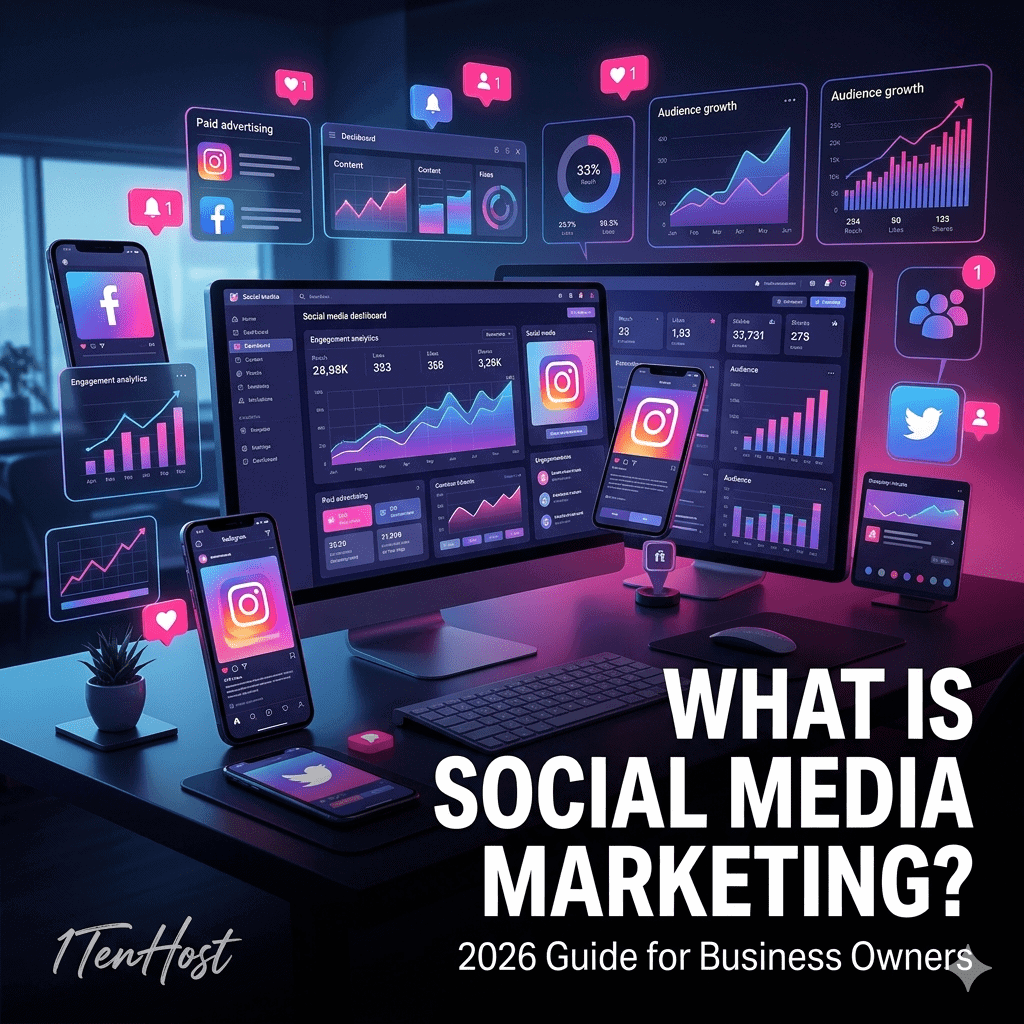
Learn what social media marketing is in 2026, including Instagram, TikTok, LinkedIn, paid ads, organic growth, and social media strategies for businesses.
Introduction
Social media has evolved from a simple communication tool into one of the most powerful digital marketing channels for businesses worldwide. In 2026, brands use social platforms not only to build awareness, but also to generate leads, drive sales, provide customer support, and grow long-term communities.
That’s why understanding what is social media marketing 2026 is so important for modern business owners.
Whether you run a startup in Karachi, manage a business in London, or target global audiences, social media marketing now influences almost every stage of the customer journey.
Platforms like:
- TikTok
- YouTube
have become major business growth channels.
But successful social media marketing isn’t just about posting random content every day. Businesses now need strategic planning, audience targeting, platform optimisation, and performance tracking to stay competitive.
In this guide, we’ll explain what social media marketing is, explore the most important platforms, compare organic and paid strategies, discuss content creation, and show how businesses can measure real SMM success in 2026.
What Is Social Media Marketing?
Social media marketing, often called SMM, is the process of promoting businesses, brands, products, or services through social media platforms.
The goal is usually to:
- Increase visibility
- Build engagement
- Generate leads
- Drive website traffic
- Increase sales
- Strengthen brand authority
Why Social Media Marketing Matters
Consumers now spend hours daily on social platforms.
Businesses use social media because it helps them connect directly with audiences in real time.
Modern SMM supports:
- Brand awareness
- Customer communication
- Community building
- Advertising campaigns
- Content distribution
Social Media Marketing in 2026
Social media marketing has become far more advanced than simple posting.
Businesses now rely on:
- AI-driven targeting
- Short-form video
- Influencer partnerships
- User-generated content
- Social commerce
- Advanced analytics
Competition has increased, making strategic execution more important than ever.
SMM for Small Businesses
Even smaller businesses can now compete online effectively.
A well-planned social strategy often helps local businesses attract highly targeted audiences without massive advertising budgets.
Key Platforms Overview
Different platforms serve different business goals and audiences.
Instagram for Business
Instagram remains one of the most popular platforms for brands in 2026.
It works especially well for:
- Fashion brands
- Restaurants
- Beauty businesses
- Travel companies
- eCommerce stores
Instagram focuses heavily on visual content including:
- Reels
- Stories
- Carousels
- Short videos
Strong visuals often drive higher engagement.
LinkedIn for B2B
LinkedIn is highly important for professional and B2B marketing.
Businesses use LinkedIn for:
- Industry networking
- Lead generation
- Recruitment
- Corporate branding
- Thought leadership
B2B companies in Canary Wharf, Clifton Karachi, Soho, and Manhattan increasingly rely on LinkedIn marketing strategies.
TikTok Marketing
TikTok has become a major growth platform for brands targeting younger audiences.
TikTok performs well for:
- Viral campaigns
- Short-form videos
- Product discovery
- Entertainment-driven marketing
Creative content often outperforms polished advertising on TikTok.
Facebook Marketing
Facebook still remains important, particularly for:
- Local businesses
- Community groups
- Paid advertising
- Retargeting campaigns
Facebook advertising continues to offer powerful audience targeting tools.
Organic vs Paid SMM
Businesses typically use a combination of organic and paid social media strategies.
Organic Reach vs Paid Ads
Organic social media refers to unpaid content.
Examples include:
- Regular posts
- Stories
- Reels
- Community engagement
Paid social media involves advertising budgets to boost visibility.
Benefits of Organic Social Media
Organic marketing helps businesses:
- Build trust
- Develop communities
- Increase engagement
- Strengthen brand identity
However, organic reach has declined on many platforms over time.
Benefits of Paid Social Media
Paid advertising helps businesses:
- Reach targeted audiences quickly
- Generate leads faster
- Scale campaigns
- Improve visibility
Platforms like Meta Ads Manager allow advanced demographic targeting.
Why Businesses Need Both
Organic content builds relationships.
Paid campaigns scale visibility.
The strongest social strategies combine both approaches effectively.
Building a Social Strategy
Successful social media marketing requires planning rather than random posting.
Define Business Goals
Businesses should first identify what they want from social media.
Common goals include:
- Brand awareness
- Website traffic
- Lead generation
- Customer engagement
- Product sales
Clear goals guide content strategy.
Identify Target Audiences
Understanding audience behaviour is essential.
Businesses should analyse:
- Age groups
- Interests
- Online behaviour
- Platform usage
- Purchase intent
Different audiences prefer different platforms.
Content Calendar Setup
Content calendars help businesses stay organised and consistent.
A strong content plan may include:
- Educational posts
- Promotional content
- Behind-the-scenes updates
- Customer testimonials
- Industry insights
Consistency matters heavily in SMM.
Platform-Specific Strategies
Each platform requires different content styles.
For example:
- TikTok prioritises entertainment
- LinkedIn values expertise
- Instagram rewards visual storytelling
Copying the exact same content everywhere often reduces performance.
Content Types That Work
Content format strongly affects engagement levels.
Reels, Stories, Carousels
Short-form content dominates modern social media.
Popular formats include:
- Reels
- Stories
- Carousels
- Shorts
- Live streams
Video content usually receives stronger engagement than static images.
Educational Content
Helpful educational posts often perform well because they provide value.
Examples include:
- Tutorials
- Tips
- Industry advice
- FAQs
- Case studies
Educational content also supports authority building.
User-Generated Content
User-generated content increases trust because real customers create it.
Examples include:
- Reviews
- Testimonials
- Customer photos
- Product videos
Authenticity matters greatly in modern marketing.
Trend-Based Content
Trending topics and viral formats can increase visibility quickly.
However, trends should still align with brand identity.
Chasing irrelevant trends often feels forced.
Measuring SMM Success
Tracking performance is essential for improving results over time.
Engagement Rate & Reach KPIs
Important social media metrics include:
- Reach
- Impressions
- Engagement rate
- Click-through rate
- Follower growth
- Conversion rate
These metrics help businesses evaluate content performance.
Website Traffic Tracking
Social campaigns should ideally support business objectives beyond likes and comments.
Businesses often track:
- Website visits
- Lead submissions
- Product purchases
- Booking requests
Traffic quality matters more than vanity metrics.
Analytics Tools
Popular analytics platforms include:
Data helps improve future campaigns.
Continuous Optimisation
Social media marketing constantly evolves.
Businesses should regularly test:
- Posting times
- Content formats
- Ad creatives
- Captions
- Audience targeting
Small improvements often create major long-term gains.
Frequently Asked Questions
What is social media marketing?
Social media marketing is the process of promoting businesses through platforms like Instagram, Facebook, LinkedIn, TikTok, and YouTube.
Which social media platform is best for businesses?
The best platform depends on the target audience and business type. Instagram works well for visual brands, while LinkedIn is strong for B2B marketing.
Is paid advertising necessary for social media growth?
Not always, but paid ads can significantly increase reach and accelerate growth.
What type of social media content performs best?
Short-form videos, educational content, and authentic user-generated content often perform strongly in 2026.
How do businesses measure social media success?
Businesses typically track engagement, reach, traffic, leads, conversions, and return on investment.
Conclusion
Understanding what is social media marketing 2026 is essential for businesses wanting to stay competitive in today’s digital environment.
Social media is no longer just a branding tool. It has become a major channel for lead generation, customer engagement, advertising, and long-term business growth. From Instagram Reels and TikTok videos to LinkedIn thought leadership and Facebook advertising, businesses now have more opportunities than ever to connect with targeted audiences online.
The most successful brands combine strategy, consistency, creativity, and data-driven optimisation to build strong social media presence over time.
Contact Information
Need help with social media management, content strategy, or paid advertising campaigns?
Website: 1TenHost
Email: info@1tenhost.com
WhatsApp: WhatsApp Support

1TenHost.com




Leave a Reply