
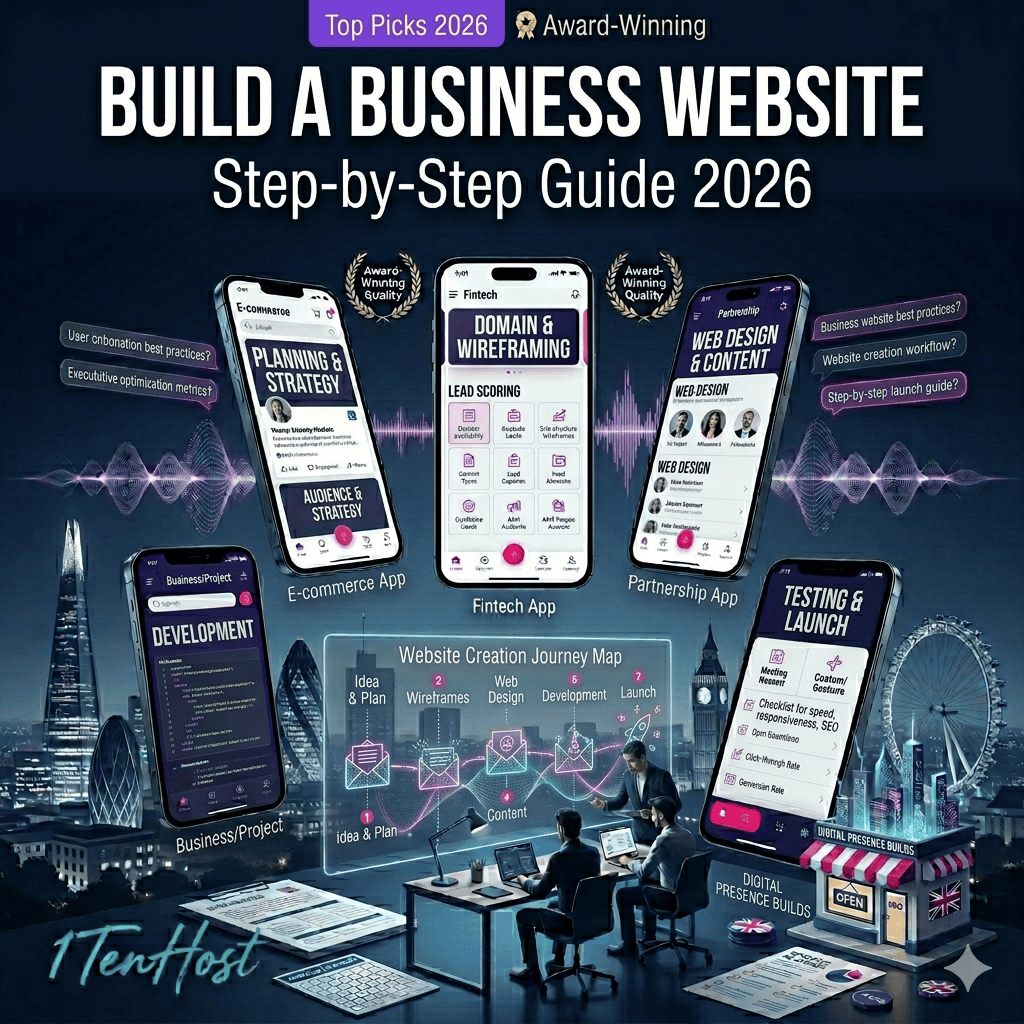
Learn how to create a website for your business in 2026. Follow this step-by-step guide covering domains, hosting, design, development, launch, and SEO essentials.
Introduction
Every successful business today needs a professional online presence. Whether you’re running a local service company in Karachi, a startup in London, or an international ecommerce brand, your website often serves as the first impression potential customers have of your business.
The good news is that creating a website has become easier and more affordable than ever. However, building a website that actually attracts visitors, generates leads, and converts customers requires more than simply choosing a template and publishing a few pages.
A successful business website combines strategy, design, user experience, SEO, and technical performance. When these elements work together, your website becomes a powerful marketing and sales tool that operates 24/7.
In this guide, you’ll learn exactly how to create a website for your business, from initial planning and domain selection to launch and ongoing optimisation.
Planning Your Website
Before choosing a design or purchasing hosting, you need a clear plan.
Many businesses rush into development without defining their goals, which often leads to costly revisions later.
Business Goals
Start by asking:
- What is the purpose of the website?
- Who is the target audience?
- What actions should visitors take?
- How will success be measured?
Common business goals include:
- Generating leads
- Selling products online
- Booking appointments
- Building brand awareness
- Providing customer support
Clear goals influence every decision that follows.
Identify Your Target Audience
Understanding your audience helps shape:
- Website design
- Content strategy
- Navigation structure
- Marketing campaigns
For example, a local business in Karachi may require a different approach than a company targeting clients across London and Europe.
Plan Your Website Structure
Most business websites include:
- Home Page
- About Us
- Services
- Products
- Blog
- Contact Page
- Privacy Policy
Creating a sitemap early helps streamline development.
Research Your Competitors
Review competitor websites and analyse:
- Design quality
- User experience
- Content strategy
- SEO performance
- Calls to action
The goal isn’t to copy them but to identify opportunities to improve.
Choosing Domain & Hosting
Your domain name and hosting provider form the foundation of your website.
Domain Tips
Your domain should be:
- Easy to remember
- Easy to spell
- Relevant to your business
- Short whenever possible
Good Domain Name Examples
Strong domains often:
- Match the business name
- Include relevant keywords naturally
- Avoid unnecessary numbers or symbols
For example:
- yourbusiness.com
- londonwebdesign.co.uk
- karachidigitalmarketing.com
Domain Extensions
Popular options include:
- .com
- .co.uk
- .net
- .org
For international businesses, .com remains the preferred choice.
Hosting Types
Choosing the right hosting affects performance, security, and scalability.
Shared Hosting
Best for:
- Small websites
- Startups
- Personal projects
Advantages:
- Affordable
- Easy to manage
VPS Hosting
Best for:
- Growing businesses
- Medium-traffic websites
Advantages:
- Better performance
- Increased control
Cloud Hosting
Best for:
- Ecommerce stores
- High-traffic websites
- Scalable applications
Advantages:
- Excellent reliability
- Flexible resources
What to Look for in Hosting
Choose a provider offering:
- Fast servers
- SSL certificates
- Daily backups
- Security protection
- Responsive support
Quality hosting contributes directly to SEO and user experience.
Design & Development
Once your foundation is ready, it’s time to build the website itself.
CMS vs Custom
One of the biggest decisions is choosing between a content management system (CMS) and custom development.
CMS Platforms
Popular CMS options include:
- WordPress
- Shopify
- Webflow
- Wix
Advantages include:
- Faster deployment
- Lower costs
- Easier management
Most small businesses benefit from CMS-based websites.
Custom Development
Custom websites are built specifically for unique business requirements.
Advantages include:
- Complete flexibility
- Advanced functionality
- Greater scalability
Custom development is often suitable for larger organisations and specialised platforms.
Focus on User Experience
A modern website should provide:
- Simple navigation
- Fast loading speeds
- Mobile responsiveness
- Clear calls to action
Visitors should quickly find the information they need.
Essential Website Pages
Every business website should include:
Homepage
Your homepage should explain:
- Who you are
- What you offer
- Why customers should choose you
Service Pages
Dedicated service pages improve:
- SEO
- User experience
- Conversion rates
Contact Page
Include:
- Phone number
- Email address
- Contact forms
- Business location
Easy communication builds trust.
SEO During Development
Don’t wait until after launch to think about SEO.
Include:
- Keyword research
- Meta tags
- Internal linking
- Optimised URLs
- Image optimisation
Early SEO implementation saves time later.
Launch Process
Launching a website requires careful preparation.
Skipping important checks can lead to technical issues and poor user experiences.
Pre-Launch Checklist
Before going live, verify:
- All pages function correctly
- Contact forms work properly
- Mobile responsiveness is tested
- SSL certificate is active
- SEO settings are configured
A thorough review prevents avoidable problems.
Technical Testing
Check:
- Website speed
- Browser compatibility
- Broken links
- Security settings
Testing helps identify issues before visitors encounter them.
Analytics Setup
Install:
- Google Analytics
- Google Search Console
- Conversion tracking
These tools provide valuable insights into website performance.
Submit Your Website to Search Engines
After launch:
- Submit your sitemap
- Request indexing
- Monitor crawl reports
This helps search engines discover your content faster.
Announce Your Launch
Promote your website through:
- Social media
- Email marketing
- Local directories
- Business networks
A launch campaign can generate early traffic and awareness.
Common Mistakes
Many businesses unknowingly make mistakes that reduce website effectiveness.
Ignoring Mobile Users
Most traffic now comes from mobile devices.
A poor mobile experience often leads to:
- Higher bounce rates
- Lower conversions
- Reduced rankings
Slow Website Performance
Slow websites frustrate visitors and negatively impact SEO.
Common causes include:
- Large images
- Poor hosting
- Excessive plugins
Website speed should be a priority.
Weak Calls to Action
Visitors need clear guidance.
Examples include:
- Get a Free Quote
- Book a Consultation
- Contact Us Today
Strong calls to action improve conversion rates.
Lack of SEO Planning
Without SEO, even a beautifully designed website may struggle to attract traffic.
Optimisation should be integrated from the beginning.
Outdated Content
Regular updates demonstrate that your business remains active and relevant.
Fresh content supports both SEO and user trust.
Final Checklist
Before considering your website complete, ensure you have:
Website Essentials
- Domain name registered
- Reliable hosting configured
- SSL certificate installed
- Mobile-friendly design
- Fast loading pages
SEO Essentials
- Keyword-optimised pages
- Meta titles and descriptions
- XML sitemap
- Internal linking
- Google Search Console setup
Conversion Essentials
- Contact forms
- Calls to action
- Lead generation opportunities
- Analytics tracking
Security Essentials
- Strong passwords
- Regular backups
- Security monitoring
- Software updates
This checklist helps ensure your website is ready for long-term success.
FAQs
How much does it cost to create a business website in 2026?
Costs vary depending on complexity. Simple business websites may cost a few hundred pounds, while custom websites can require larger investments.
Should I build my own website or hire a professional?
Small businesses can often start with website builders or CMS platforms, while larger projects typically benefit from professional development expertise.
How long does it take to build a website?
A simple business website can take a few weeks, while custom projects may require several months.
What is the best platform for beginners?
WordPress remains one of the most popular and flexible platforms for beginners and growing businesses.
Do I need SEO when creating a website?
Yes. Implementing SEO during development helps improve visibility, traffic, and long-term business growth.
Conclusion
Learning how to create a website is one of the most valuable investments a business can make in 2026. A professional website serves as your digital storefront, marketing hub, and lead generation engine all at once.
By planning carefully, choosing the right domain and hosting, focusing on user experience, implementing SEO from the start, and following a structured launch process, businesses can build websites that not only look professional but also drive real results.
Whether you’re targeting customers in Karachi, London, or global markets, a well-designed website remains one of the most powerful tools for business growth.
Contact Information
Need help creating a professional business website?
Website: 1tenhost.com
Email: info@1tenhost.com
WhatsApp: wa.me/923451151625
Call: +923453075518
Address: P.no 2, S.713 Jaffar e Tayyar Socity, 75050, Karachi, Pakistan
Map Location: https://maps.app.goo.gl/NfLfM6VkL2UxAqjbA

1TenHost.com






Leave a Reply