
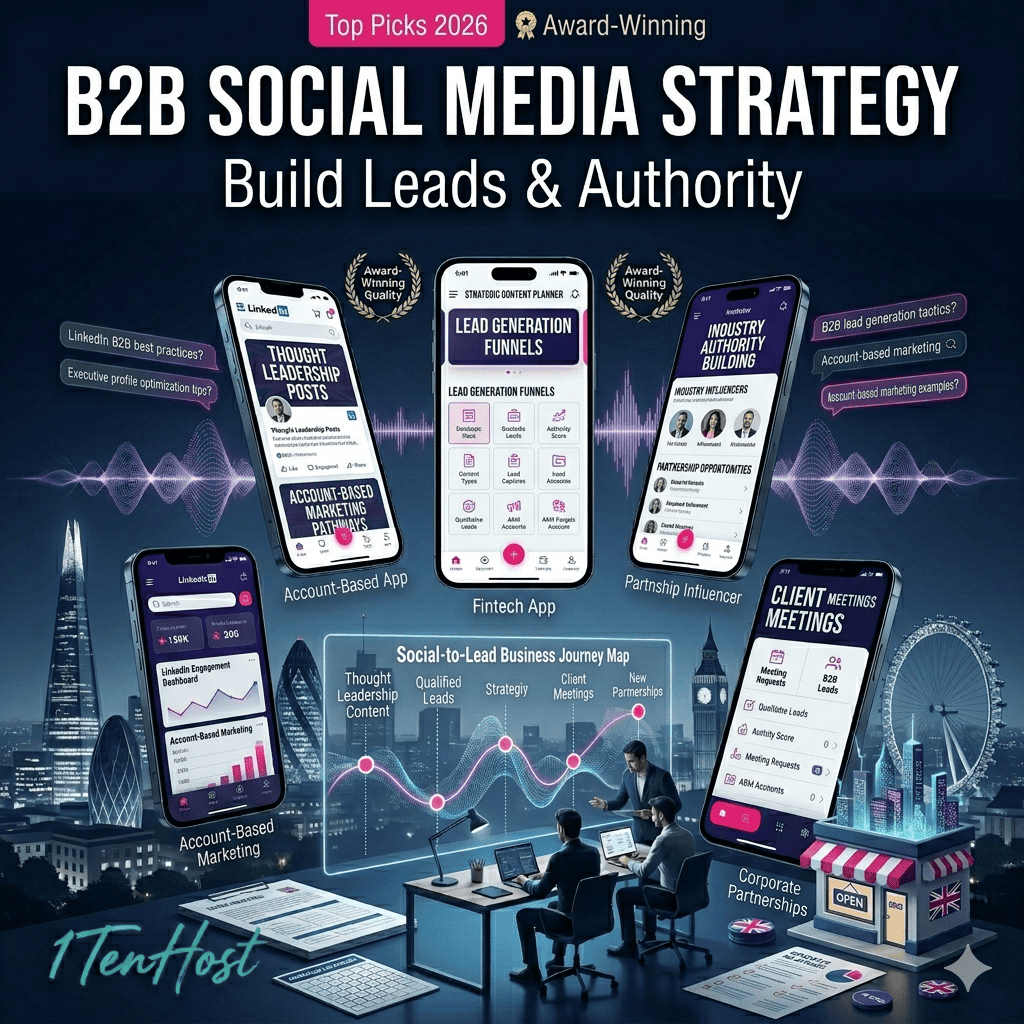
Learn how to build a successful social media strategy for B2B businesses. Discover LinkedIn marketing, social selling, content planning, lead generation, and ROI tracking for 2026.
Introduction
Many B2B companies still view social media as a branding tool rather than a revenue channel. That mindset is costing them opportunities.
In 2026, decision-makers, business owners, procurement managers, and executives spend significant time researching solutions online before ever speaking with a sales team. Platforms like LinkedIn, Instagram, YouTube, and even emerging AI-driven discovery channels have become important parts of the B2B buying journey.
The challenge is that B2B social media works differently from B2C marketing. Business buyers aren’t typically looking for entertainment or impulse purchases. They’re looking for expertise, trust, credibility, and solutions to specific problems.
A successful social media strategy B2B business leaders can rely on focuses on building authority, generating qualified leads, nurturing prospects, and supporting long-term relationships. When executed correctly, social media can become one of the most effective channels for lead generation and brand positioning.
This guide explains how B2B companies can create a winning social media strategy, leverage LinkedIn effectively, develop high-performing content, generate leads, and measure real business results.
B2B Social Media Landscape
The B2B social media environment has changed dramatically over the last few years.
Business buyers now consume content across multiple platforms before making purchasing decisions.
Why Social Media Matters for B2B
Modern buyers often:
- Research vendors online
- Read thought leadership content
- Compare competitors
- Engage with industry experts
- Seek peer recommendations
Social media supports every stage of the buyer journey.
The Rise of Social Selling
Traditional cold outreach is becoming less effective.
Many successful B2B organisations now focus on:
- Relationship building
- Personal branding
- Educational content
- Community engagement
Trust often develops long before a sales conversation begins.
Most Important B2B Platforms in 2026
Key platforms include:
- YouTube
- X (formerly Twitter)
- Facebook Groups
- Industry communities
The right mix depends on your audience and industry.
Common B2B Social Media Goals
Businesses typically use social media to:
- Generate leads
- Build authority
- Increase visibility
- Support recruitment
- Drive website traffic
- Strengthen customer relationships
Clear objectives should guide every activity.
LinkedIn Strategy Deep Dive
LinkedIn remains the most powerful platform for most B2B organisations.
It provides direct access to professionals, decision-makers, and industry leaders.
Company Page Optimisation
Your company page should clearly communicate:
- Services offered
- Industry expertise
- Brand positioning
- Contact information
- Key achievements
A complete and professional page improves credibility.
Optimising Your LinkedIn Presence
Best practices include:
- Professional branding
- Consistent posting
- Employee advocacy
- Strong company descriptions
- Relevant keywords
These improvements increase discoverability.
Thought Leadership Posts
Thought leadership remains one of the most effective B2B content formats.
Topics may include:
- Industry trends
- Expert opinions
- Research insights
- Business lessons
- Market predictions
The goal is to demonstrate expertise rather than promote services constantly.
Employee Personal Brands
People engage with people more than company logos.
Encouraging team members to publish valuable insights can significantly expand organic reach.
Benefits include:
- Higher engagement
- Increased trust
- Greater visibility
- Stronger networking opportunities
Personal branding often amplifies company marketing efforts.
Content Pillars for B2B
Random posting rarely delivers consistent results.
Successful businesses organise content around strategic pillars.
Educational Content
Educational content helps answer audience questions and solve problems.
Examples include:
- How-to guides
- Industry insights
- Tutorials
- Frameworks
- Best practices
This content attracts potential customers at the research stage.
Why Education Builds Trust
Decision-makers prefer vendors who demonstrate expertise.
Educational content positions your brand as a trusted resource rather than a salesperson.
Case Studies & Testimonials
Proof matters in B2B marketing.
Case studies help prospects understand:
- Real-world results
- Problem-solving capabilities
- Industry experience
- Return on investment
Strong testimonials can significantly influence purchasing decisions.
Additional Content Pillars
Consider including:
- Company updates
- Industry news
- Behind-the-scenes content
- Team highlights
- Customer success stories
A balanced mix keeps content engaging and credible.
Building a Content Calendar
A structured content calendar improves consistency.
Plan content around:
- Weekly themes
- Business goals
- Product launches
- Seasonal opportunities
- Industry events
Consistency often outperforms volume.
Paid Social for B2B
Organic reach remains valuable, but paid social can accelerate growth.
LinkedIn Ads for B2B
LinkedIn Ads provide powerful targeting options.
Businesses can target based on:
- Job titles
- Industries
- Company size
- Seniority levels
- Geographic location
This precision makes LinkedIn especially valuable for B2B campaigns.
Effective LinkedIn Ad Formats
Popular formats include:
- Sponsored content
- Lead generation forms
- Video ads
- Carousel ads
- Event promotion ads
The right format depends on campaign objectives.
Budget Considerations
B2B advertising costs can be higher than consumer-focused campaigns.
However, higher-value leads often justify the investment.
Focus on:
- Lead quality
- Conversion rates
- Pipeline impact
- Customer lifetime value
Rather than clicks alone.
Beyond LinkedIn
Other paid social opportunities include:
- Meta Ads
- YouTube Ads
- Retargeting campaigns
- Industry-specific platforms
Multi-channel approaches often produce stronger results.
Lead Generation via Social
Generating likes and followers is not enough.
Successful B2B social strategies generate measurable business opportunities.
Social Selling Tactics
Social selling involves building relationships before pitching services.
Effective approaches include:
- Meaningful engagement
- Helpful comments
- Personalised outreach
- Sharing valuable insights
- Building professional networks
Relationship-first strategies tend to outperform aggressive sales tactics.
Using Content for Lead Generation
High-performing lead magnets include:
- Industry reports
- Whitepapers
- Webinars
- Templates
- Checklists
These resources help convert engagement into leads.
Nurturing Prospects
Most B2B purchases involve lengthy decision-making processes.
Social media can support nurturing through:
- Consistent education
- Ongoing engagement
- Trust building
- Brand familiarity
Prospects often engage with content for months before enquiring.
Aligning Marketing and Sales
The strongest results occur when sales and marketing teams collaborate.
Shared goals improve:
- Lead quality
- Conversion rates
- Revenue generation
Social media should support the entire sales process.
B2B Social ROI Framework
One of the biggest challenges in B2B marketing is measuring social media return on investment.
Social Attribution Model
Attribution helps identify how social media contributes to business outcomes.
Common attribution models include:
- First-touch attribution
- Last-touch attribution
- Multi-touch attribution
Most B2B journeys involve multiple interactions before conversion.
Metrics That Matter
Focus on business-focused metrics such as:
- Qualified leads
- Sales opportunities
- Revenue influenced
- Customer acquisition cost
- Pipeline value
These provide more meaningful insights than vanity metrics.
Leading Indicators
Useful performance indicators include:
- Engagement rates
- Website visits
- Content downloads
- Webinar registrations
- Email sign-ups
These signals often predict future conversions.
Monthly Reporting Framework
Review performance across:
Audience Growth
- Followers gained
- Reach
- Brand visibility
Engagement
- Comments
- Shares
- Click-through rates
Lead Generation
- Leads captured
- Conversion rates
- Sales opportunities created
Regular reviews support continuous improvement.
Best Practices for B2B Social Media Success
To build a stronger social media presence in 2026:
- Focus on audience value first
- Prioritise LinkedIn for B2B growth
- Publish consistently
- Invest in thought leadership
- Share customer success stories
- Use social selling techniques
- Track meaningful business metrics
- Align marketing and sales efforts
These principles support sustainable long-term growth.
FAQs
What is the best social media platform for B2B businesses?
LinkedIn is typically the most effective platform because it provides direct access to business professionals, decision-makers, and industry leaders.
How often should a B2B company post on social media?
Consistency is more important than frequency. Most businesses benefit from posting several times per week while maintaining content quality.
Does social media generate B2B leads?
Yes. Social media can generate qualified leads when combined with valuable content, social selling, and strong lead-generation offers.
Is LinkedIn advertising worth it for B2B companies?
For many industries, LinkedIn Ads deliver high-quality leads because of advanced professional targeting capabilities.
How do you measure B2B social media ROI?
Track metrics such as qualified leads, sales opportunities, conversion rates, pipeline value, and revenue influenced rather than focusing solely on engagement metrics.
Conclusion
Creating a successful social media strategy for B2B businesses requires more than regular posting. It involves understanding your audience, building authority, creating valuable content, nurturing relationships, and measuring real business outcomes.
As competition increases across London, New York, Europe, and global markets, B2B brands that focus on thought leadership, social selling, and strategic content creation will have a significant advantage.
The companies that treat social media as a long-term relationship-building tool rather than simply a promotional channel will be best positioned for growth in 2026 and beyond.
Contact Information
Looking to build a results-driven B2B social media strategy?
Website: 1tenhost.com
Email: info@1tenhost.com
WhatsApp: wa.me/923451151625
Call: +923453075518
Address: P.no 2, S.713 Jaffar e Tayyar Socity, 75050, Karachi, Pakistan
Map Location: https://maps.app.goo.gl/NfLfM6VkL2UxAqjbA

1TenHost.com





Leave a Reply