
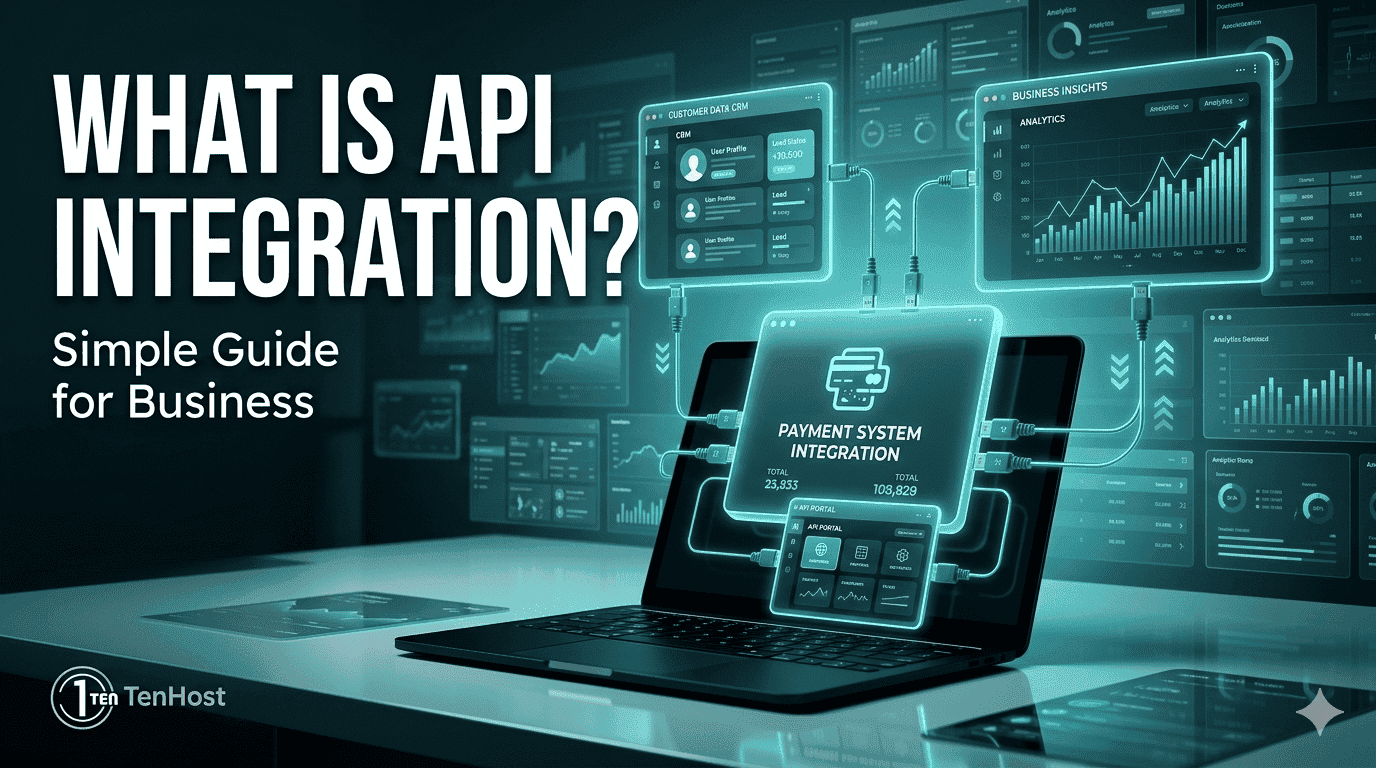
Confused about API integration? Learn what API integration is, how it works, and how it helps automate your business and connect systems easily.
Introduction
Ever wondered how your website connects with payment gateways, CRMs, or apps like booking systems?
That’s where API integration comes in.
You don’t need to be a developer to understand it. At its core, API integration is simply a way for different software systems to talk to each other and share data.
For business owners in New York, across Europe, or operating globally, this is what powers automation, saves time, and improves customer experience.
In this guide, you’ll learn what API integration is, how it works in simple terms, and how you can use it to streamline your business.
What Is an API?
Before understanding integration, you need to know what an API is.
An API (Application Programming Interface) is a set of rules that allows one software application to communicate with another.
Think of it like a waiter in a restaurant.
- You place an order
- The waiter takes it to the kitchen
- The kitchen prepares the food
- The waiter brings it back to you
In this example:
- You = the user
- Waiter = API
- Kitchen = system or server
The API acts as the middle layer that carries requests and responses between systems.
How APIs Work
APIs follow a simple communication pattern.
Request Response Model
When you use a website or app:
- A request is sent (for example, “show user data”)
- The server processes it
- A response is returned (the data you asked for)
This happens in milliseconds.
For example, when you log into a website, an API checks your credentials and returns access if everything is correct.
REST vs SOAP vs GraphQL
There are different types of APIs, but you’ll often hear these three.
REST (Representational State Transfer)
- Most common
- Lightweight and fast
- Used in modern web applications
SOAP (Simple Object Access Protocol)
- Older and more structured
- Used in enterprise systems
GraphQL
- Flexible and efficient
- Lets you request exactly the data you need
For most modern websites, REST APIs are the standard choice.
Types of Integrations
API integration connects your website or system with other tools.
Payment Integrations
Connecting your website with payment gateways allows you to accept online payments.
Popular examples include:
- Stripe
- PayPal
These APIs handle transactions securely without you building everything from scratch.
CRM Integrations
CRM (Customer Relationship Management) tools help manage leads and customers.
Common platforms:
- Salesforce
- HubSpot
By integrating them with your website, you can automatically capture leads, track activity, and manage customer data.
Business Benefits
So why should you care about API integration?
Automation and Efficiency
API integration removes manual work.
Instead of copying data between systems, everything updates automatically.
Benefits include:
- Faster processes
- Fewer errors
- Better productivity
- Real-time data access
For example, when a customer places an order, your system can automatically:
- Process payment
- Update inventory
- Send confirmation email
All without human input.
Common Use Cases
API integration is used everywhere, even if you don’t notice it.
Real World Examples
Here are a few practical examples:
- Payment gateway integration
- Shipping API for tracking orders
- Contact form connected to CRM
- Email marketing tools
- Login using Google or social accounts
- Maps and location services
These integrations create smoother user experiences and smarter systems.
Getting Started
You don’t need to build everything from scratch.
Here’s how to begin with API integration.
Step by Step Approach
Understand your needs
What systems do you want to connect?
Choose the right tools
Look for platforms that offer APIs.
Work with developers or agencies
They can handle setup and ensure everything works correctly.
Test everything
Make sure data flows properly and securely.
Why API Integration Matters for Modern Businesses
In today’s digital world, businesses rely on multiple tools.
Without integration, everything becomes messy and inefficient.
With API integration, you can:
- Connect your systems
- Automate tasks
- Improve customer experience
- Scale your business faster
Whether you’re running an online store in Europe or managing services in New York, APIs help everything run smoothly behind the scenes.
FAQ Section
What is API integration in simple terms?
API integration is the process of connecting different software systems so they can share data and work together automatically.
How do APIs work for websites?
APIs send requests to a server and receive responses, allowing websites to fetch or send data between systems.
What is the difference between API and integration?
An API is the tool that enables communication, while integration is the process of connecting systems using APIs.
Is API integration expensive?
It depends on complexity. Simple integrations are affordable, while complex systems may require more development.
Do small businesses need API integration?
Yes, even small businesses benefit from automation, better efficiency, and improved customer experience.
Conclusion
API integration might sound technical, but the idea is simple. It connects systems so they can work together without manual effort.
For business owners, this means less time on repetitive tasks and more time focusing on growth.
From payment systems to CRMs and automation tools, APIs are the backbone of modern digital operations.
If you’re planning to integrate APIs into your website or improve your current system, working with the right team can make the process smooth and stress-free. You can explore solutions at 1tenhost.com, or reach out directly via email at info@1tenhost.com. If you prefer a quick chat, you can also connect on WhatsApp at https://wa.me/923451151625. It’s a simple way to discuss your needs and find the right approach for your business.

1TenHost.com





Leave a Reply